
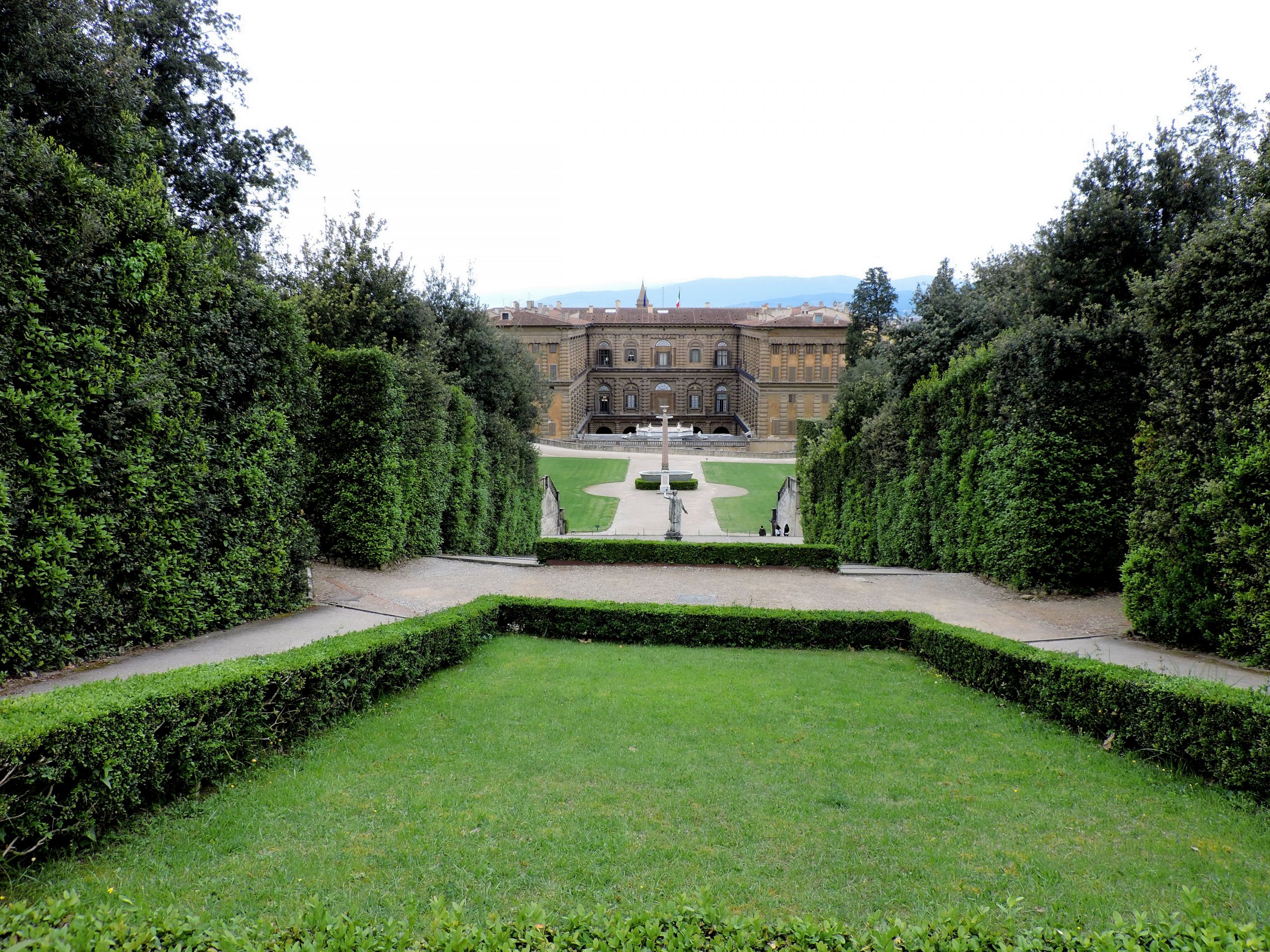
The Boboli Gardens are a beautiful hotspot for tourists and locals alike. With spring beginning to sweep Italy, it is the perfect time to visit. Guests can find blooming flowers, shady trees, and breathtaking views just minutes from the heart of the city.
Boboli Garden’s Hisory
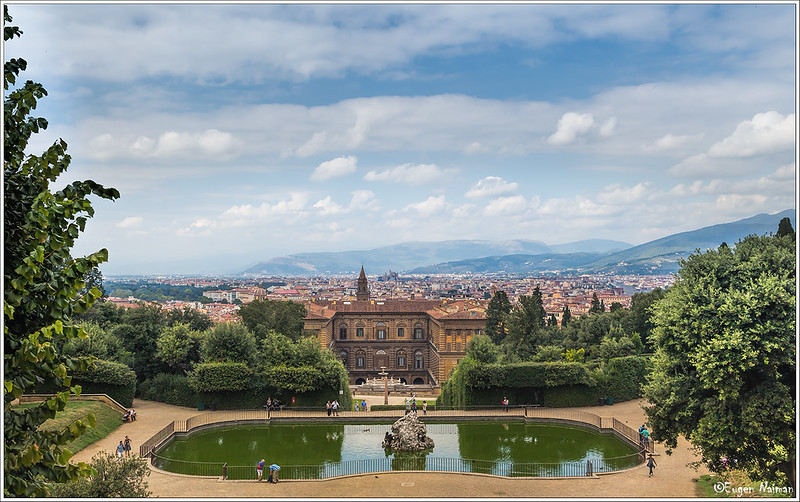
These gardens are right behind the historic Pitti Palace, so visitors can gather tickets for both areas in one trip. They belonged to the Grand Duke of Tuscany, Cosimo I de Medici, and his wife Eleonora di Toledo. The couple took great strides in the advancement of Florence’s economic and cultural impact. Eleonora used the income she earned as a businesswoman to commission the construction of their garden in the mid-16th century.
Bernardo Buontalenti, famous a sculptor, artist, and architect was selected to work on her grotto from 1536 to 1608. Since then, there have been multiple additions over the last few centuries. The gardens were opened to the public in 1766, but fountains, sculptures, buildings, and trees were added along the way and even afterward. The result is an open-air museum, where natural beauty and history align.
What to see at the Gardens
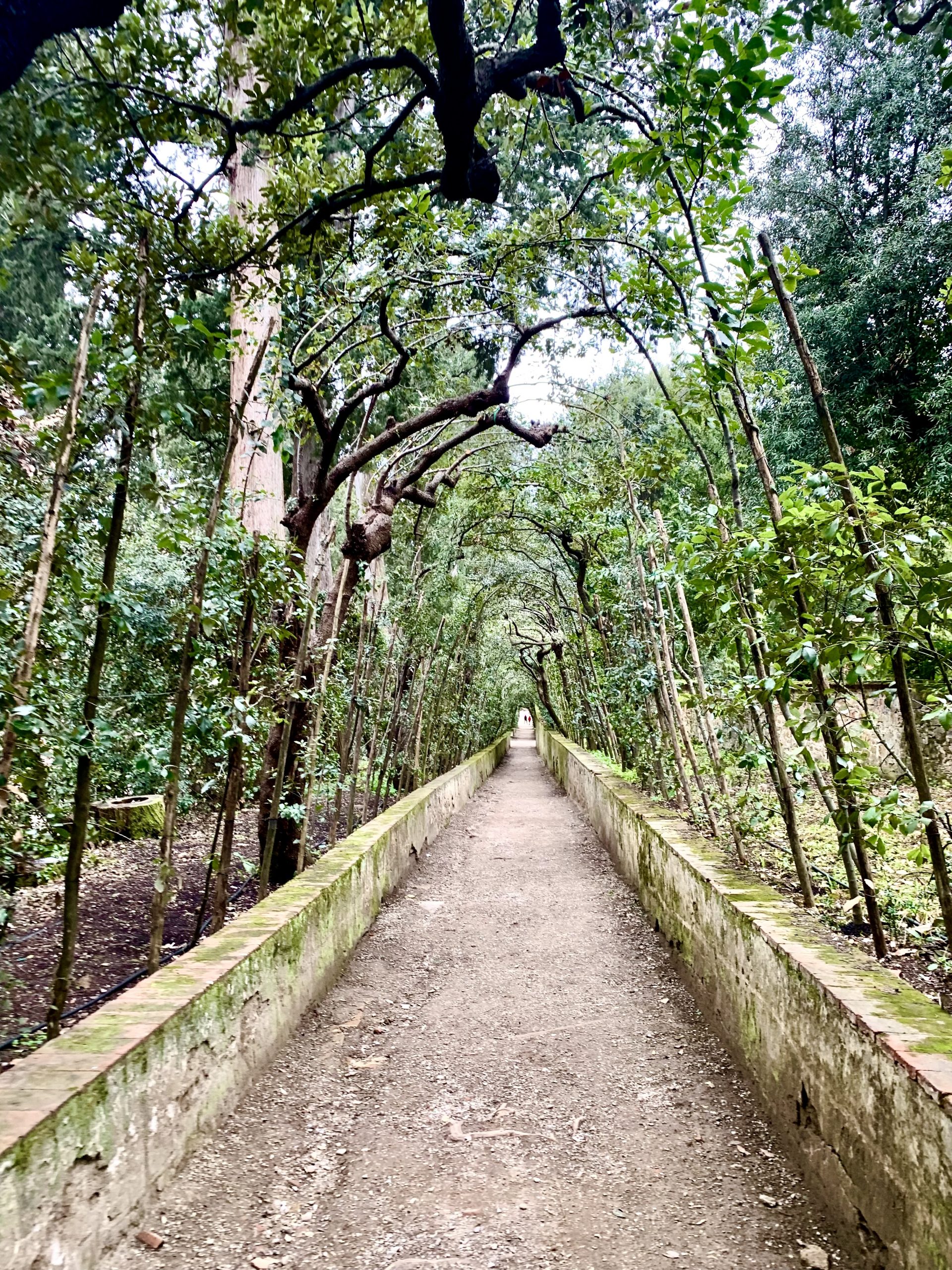
Guests can find several little curiosities throughout the 11 acres. Lining the path between them are trees that curve overhead. These cerchiate, or branch archways, create a sense of whimsy. Light breaks through the covering of leaves in golden rays, the trees stretching to protect you from the heat. They can lead to several sculptures and fountains, like the Isoloto.
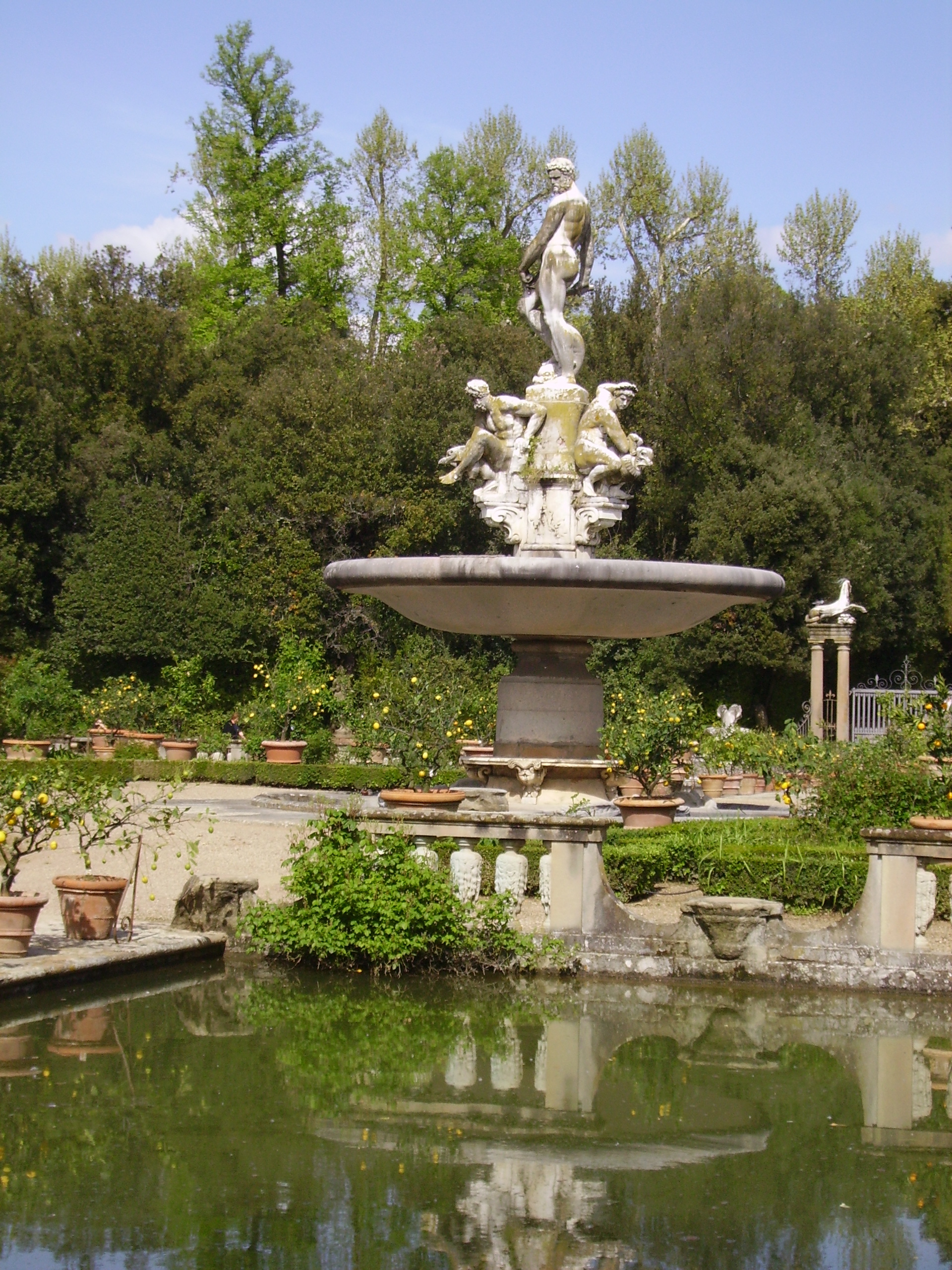
The Isolota is a glittering pond enclosed by trees. It features a sculpture of Andromedia and Perseus and The Fountain of the Ocean. The arches can also take guests partway to the Fountain of Neptune by the Amphitheater and the Fontana del Bacchino.
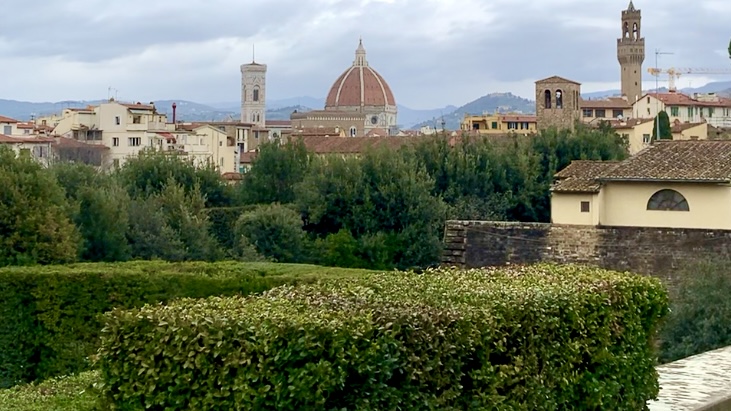
If you would like to get a view of the city, you can climb up the shaded path to Chestnut Hill. There is a peaceful stretch of grass to sit for a picnic and a hilltop view of the whole of Florence. You can even see the top of the Duomo from there.
Another skyline view is from the Gentilman’s Pavillion. One side has a view of the city and much of the gardens and the other side shows off the Tuscany hillside.
Down below there are a few interesting little structures. The Lemon House is custard colored building that was built between 1777 and 1778. It is surrounded by flowerbeds of roses and is the winter home to over 500 citrus plants.
Tourists may have noticed the citrus theme throughout the city, a call back to the Medici dynasty, and a local fruit. Well, here these trees have been looked after for hundreds of years.
There is also the Kaffeehaus, a pretty rococo pavilion with a mint color and an onion-shaped dome. It was built between 1774 and 1785, though in use as a resting area by 1775.
Within it, there are little gardens, sculptures, and paintings from famous Florentine artists at the time like Giuseppe del Moro, Giuliano Traballesi, and Pasquale Micheli. The lighthearted, naturalistic style fits right in with springtime.
Beyond the buildings, under trees, and down wandering paths, are several little gardens. One of the most charming spots is the Upper Botanical Garden, accessed through Cypress Lane.
It is a botanical garden created in the mid-nineteenth century with exotic plants, terraces, and a grand pond. The pond has been divided into 48 cells, each holding a different plant species. It is, in itself, a historical landmark.
Speaking of historical landmarks, it can’t be missed that the Boboli Gardens are a companion to Pitti Palace. Pitti Palace is one of those must-see galleries in Florence, home to paintings, sculptures, and brilliant ceiling frescos.
Many of its rooms are fascinating to walk through with one’s head tilted up. Visitors can even see the gardens and the city from its windows. We have a guided tour with one of our certified tour guides.
Guides can take visitors through both areas. Through this experience, you can learn more about their history, charm, and botanical qualities.

Recent Comments