
Autumn is the perfect time to explore Florence and dive into the fascinating legacy of the powerful Medici family, who shaped the city’s art, culture, and politics for centuries. When the temperatures drop a bit and there are fewer crowds in town it might be a perfect time to discover the historical tours of Florence which offer a more intimate experience of the Medici rich Renaissance heritage. Here are some key highlights and tours to consider for exploring the Medici legacy:
Palazzo Medici Riccardi
The first place in the tour itinerary to start with is Palazzo Medici Riccardi, a grand palace which was the first residence of the Medici family, commissioned by Cosimo the Elder in the 15th century. Take a guided tour through the lavish rooms, admire the Renaissance architecture. Don’t forget to pay attention to the courtyard, characteristic of the Renaissance era, which is a foretaste of what you will see inside the building and don’t miss the beautiful frescoes in the Chapel of the Magi by Benozzo Gozzoli. These frescoes depict the Procession of the Magi, filled with symbolic references to the Medici’s power and influence.

Medici Chapels
The next stop on the route is a visit to the Medici Chapels within the Basilica of San Lorenzo that provides a deeper understanding of the family’s devotion and their connection to the church. The stunning New Sacristy was designed by Michelangelo and holds the tombs of notable Medici members, including Lorenzo the Magnificent. The chapels feature intricate marble work and sculptures, blending art and power in typical Medici fashion. A visit to this architectural gem will not only show you another chapter in the history of the Medici family but also will offer an unforgettable encounter with the art of Michaelangelo.

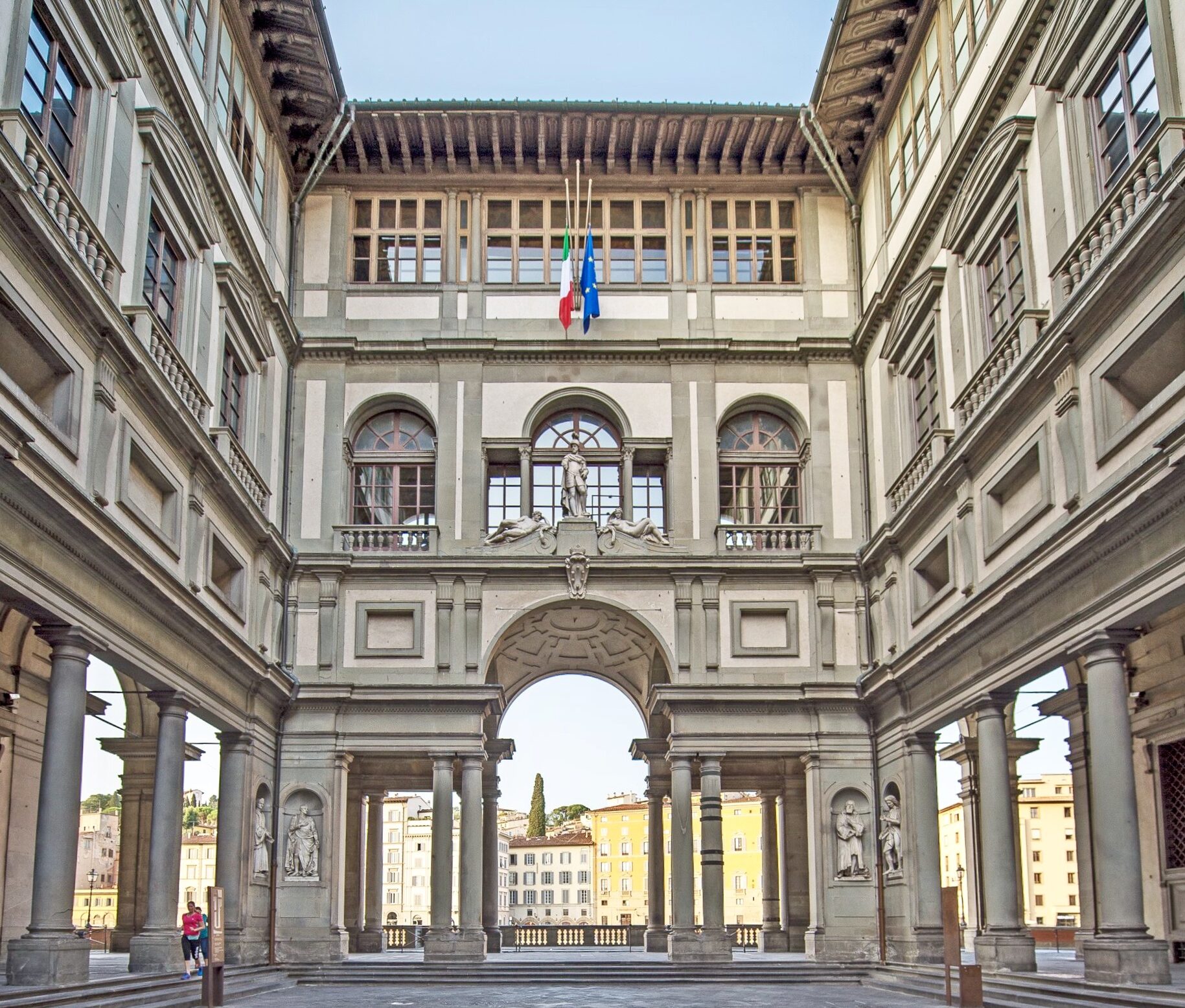
The Uffizi Gallery and Medici art collection
The Uffizi Gallery is one of the most important art museums in the world, and much of its collection is owed to the Medici. The gallery offers tours focusing on the family’s role as art patrons, allowing visitors to appreciate masterpieces by Botticelli, Michelangelo, Leonardo da Vinci, and others. Learn how the Medicis commissioned and influenced much of the Renaissance art that defined Florence. In addition to being efficient politicians, the Medici were also important patrons of the arts whose financial support helped many artists whose masterpieces we can admire in the gallery to this day.
Palazzo Vecchio
Right next to this famous art gallery is one of Florence’s most important squares, Piazza della Signoria and on it is the Palazzo Vecchio. This historic building is a symbol of the political power of Florence and thus a symbol of the domination of the Medici family over the years. The building was originally designed as the seat of government of the florentine republic and after 1540 became the residence of the Medici. Because of this, Cosimo I as Grand Duke of Tuscany transformed the place into both a luxurious space and a symbol of power. The palace’s architecture and artwork, including contributions from Giorgio Vasari, serve as a testament to the family’s powerful legacy in shaping both the city and the Renaissance era.

Pitti Palace and Boboli Gardens
Next stop in our visit is the Medici’s later residence Pitti Palace that showcases the family’s love for art, luxury, and politics. You can explore the Palatine Gallery, which houses a vast collection of paintings and treasures that belonged to the Medici. Afterward, we encourage you to stroll through the Boboli Gardens, a sprawling outdoor space that the Medici designed as a symbol of their wealth and influence, featuring fountains, sculptures, and manicured landscapes.
An interesting fact is that the Pitti Palace is connected to the Palazzo Vecchio by a secret corridor whose construction was commissioned by the Medici to Giorgio Vasari. This secret passage allowed them to safely pass between the seat of power and the residential area away from the prying eyes of potential enemies

Why visit Florence in October?
Fall in Florence brings a quieter, more relaxed atmosphere, making it easier to explore historical sites without the heavy summer crowds. The cooler weather is ideal for long walks around the city and through its gardens, and the soft autumn light enhances the beauty of Florence’s iconic architecture.
A historical tour of Florence centered on the Medici legacy in October promises an enriching journey through time, immersing you in the art, power, and cultural innovations that defined the Renaissance.
Recent Comments